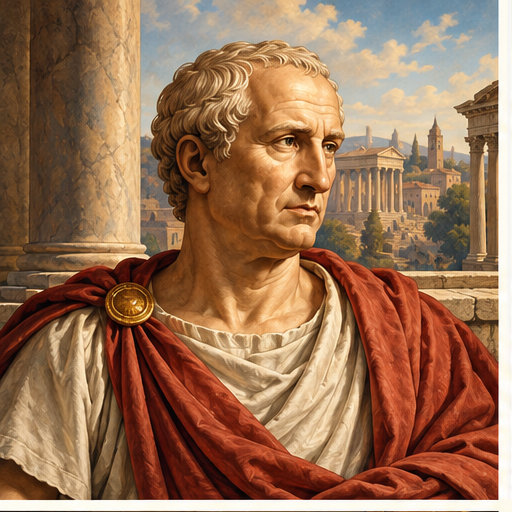
106–43 BCE
Cicero
The art of persuasion
The importance of rhetoric, audience awareness, and communicating ideas with clarity and purpose.
Ancient Wisdom · Modern Understanding
Where the art of preaching meets the science of health literacy.
Patrick J. Dunn, PhD, FAHA·Fr. Gregory J. Dunn, OP
Discover the BookThe Book
Health educators and religious educators share an enduring challenge: communicating important, sometimes difficult truths to people with different backgrounds, experiences, and levels of understanding.
Teaching That Heals explores the historical foundations of effective communication, drawing connections between classical rhetoric, the Christian intellectual tradition, public health, and modern health literacy.
Rooted in the Dominican tradition and informed by the science of health literacy, the book welcomes educators, ministers, preachers, and healthcare professionals who seek to teach with greater clarity, compassion, and impact.
Manuscript under coauthor review
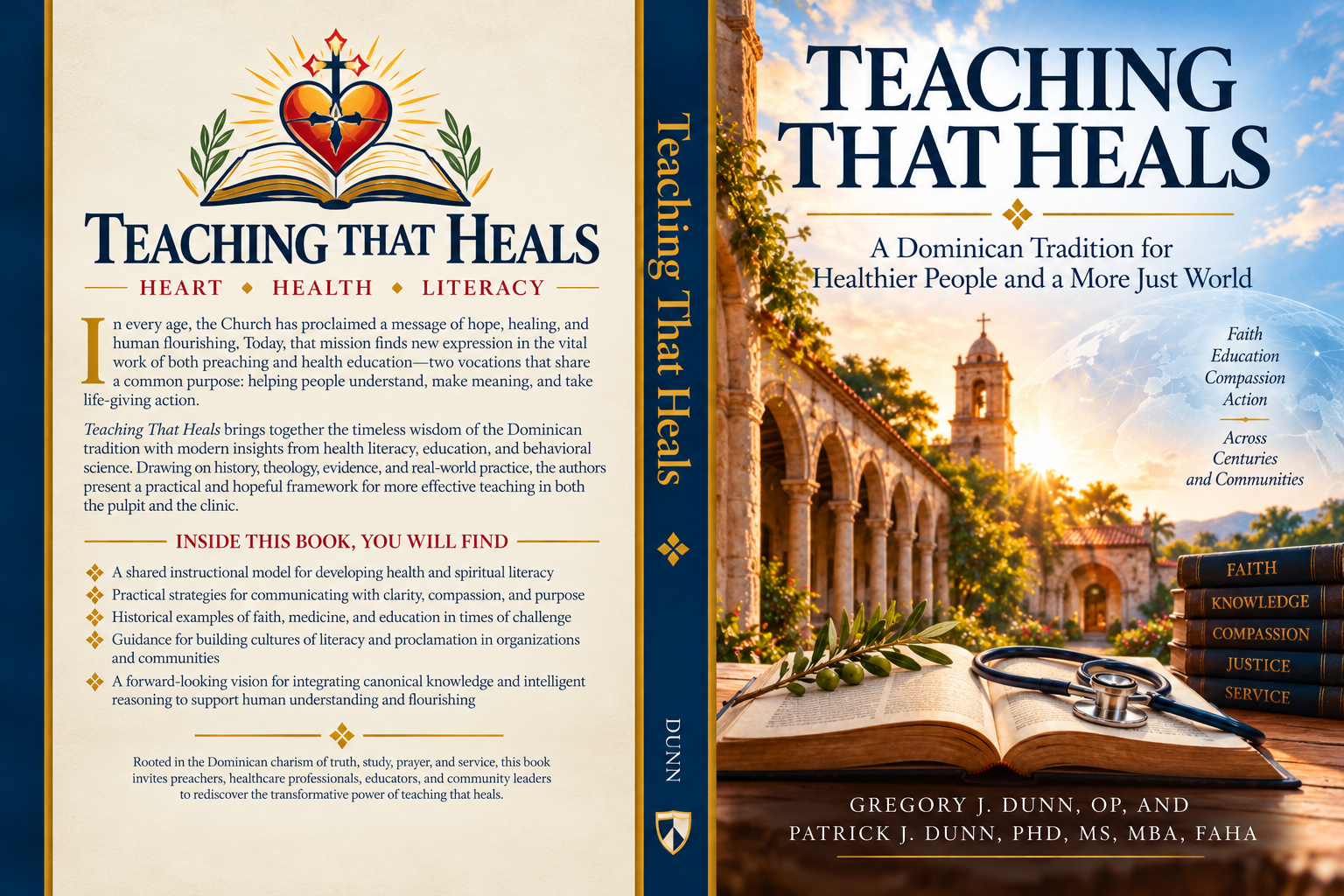
Current cover artwork. Publication details will be finalized after coauthor review.
The Story Behind the Book
The back-cover artwork expresses the book's central promise: helping people understand, make meaning, and take life-giving action.
Preaching and health education are distinct vocations, but both call for trustworthy knowledge, careful listening, compassion, and attention to the people receiving the message.
The artwork and educational materials are part of our developing open-access companion to the book.
Across the Centuries
From classical rhetoric and religious teaching to printing, epidemiology, and data visualization, these historical figures illuminate enduring principles of effective communication.
106–43 BCE
The art of persuasion
The importance of rhetoric, audience awareness, and communicating ideas with clarity and purpose.

354–430
Teach, delight, and persuade
Teaching that preserves the depth of a message while helping listeners understand and respond.

1225–1274
Faith, reason, and understanding
The role of disciplined inquiry and thoughtful explanation in the pursuit of truth.

c. 1400–1468
Expanding access to knowledge
The transformation of communication through printing and the wider dissemination of ideas.
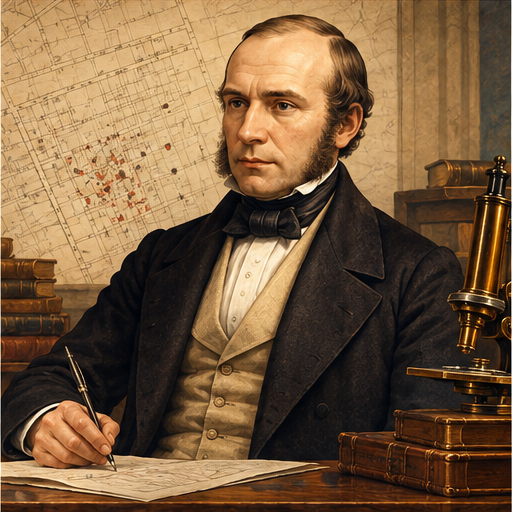
1813–1858
Evidence that informs action
The application of observation and evidence to practical public health decisions.
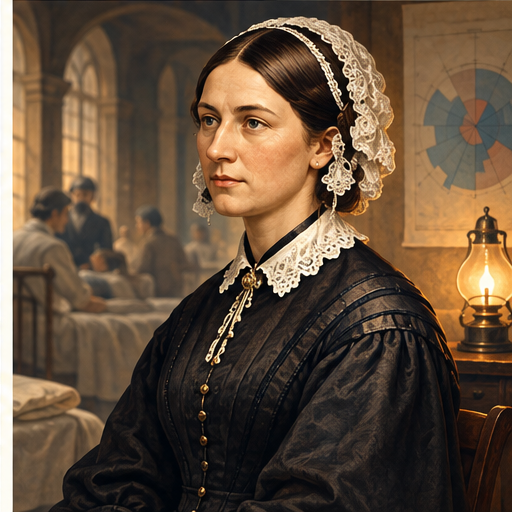
1820–1910
Making evidence understandable
The power of data, visualization, and communication to improve healthcare.
Different centuries. Different disciplines. One enduring challenge: teaching for understanding and action.
A Historical Journey
Across centuries, educators, religious communities, and health professionals faced a shared challenge: helping people understand what matters and respond wisely. These are historical connections, not a claim that modern health literacy existed unchanged in every era.
Cicero's attention to audience and argument reminds us that communication can illuminate truth or manipulate an audience.
Shared lesson: Explain with clarity; persuade ethically.
Augustine and Aquinas explored how teachers guide understanding. Dominican preaching joined study, reason, and attention to the listener.
Shared lesson: Respect the learner's active role.
Printing helped circulate texts more widely, while unequal literacy and access continued to shape who could benefit.
Shared lesson: Remove barriers beyond the printed page.
From cholera and influenza to yellow fever and faith-founded hospitals, communities learned that reliable information, compassionate care, and institutional trust matter together.
Shared lesson: Communicate uncertainty without abandoning care.
Digital media and AI can extend access while introducing new risks from misinformation, cyber disruption, and misplaced confidence.
Shared lesson: Pair technology with evidence, discernment, and accountability.
Explore the six illustrated historical profiles above for the people behind these ideas.
Teaching in Practice
These fictional teaching scenarios illustrate a common problem in two different settings. The goal is not to equate clinical care with preaching, but to learn from how each listens and responds.
Healthcare example
Delivered: A clinician explains a new medication schedule and provides written instructions.
Received: The patient nods but is unsure which medicine to take at bedtime.
Better approach: The clinician asks the patient to explain the plan in their own words, identifies the confusion, and clarifies it without blame.
Lesson: Understanding must be checked, not assumed.
Ministry example
Delivered: A preacher speaks about forgiveness and reconciliation.
Received: A listener facing a painful relationship hears the words but struggles to see what they mean in practice.
Better approach: The preacher acknowledges complexity, offers a concrete reflection, and leaves room for discernment rather than demanding an immediate response.
Lesson: A truthful message still requires attention to the listener.
An Open-Access Companion
Our aim is to make these ideas useful to health educators, preachers, students, and communities. As the manuscript completes coauthor review, we plan to make selected learning materials freely accessible here.
Short illustrated accounts of people and events that shaped how knowledge is shared.
Paired healthcare and ministry examples for discussion, reflection, and group learning.
Selected excerpts, printable guides, and illustrations will follow coauthor review.
Full manuscript chapters are not posted while the coauthors are reviewing the text.
The Authors
A father and son bringing together the science of health literacy and the art of preaching to explore how teaching can lead to understanding, reflection, and meaningful action.

The Science of Health Literacy
A health educator, researcher, and cardiovascular health technology innovator whose work explores how people understand health information, develop practical skills, and translate knowledge into healthier decisions and behaviors.

The Art of Preaching and Religious Education
A Dominican priest whose formation and work in preaching explore how enduring truths can be communicated with clarity, intellectual depth, and attention to the listener.
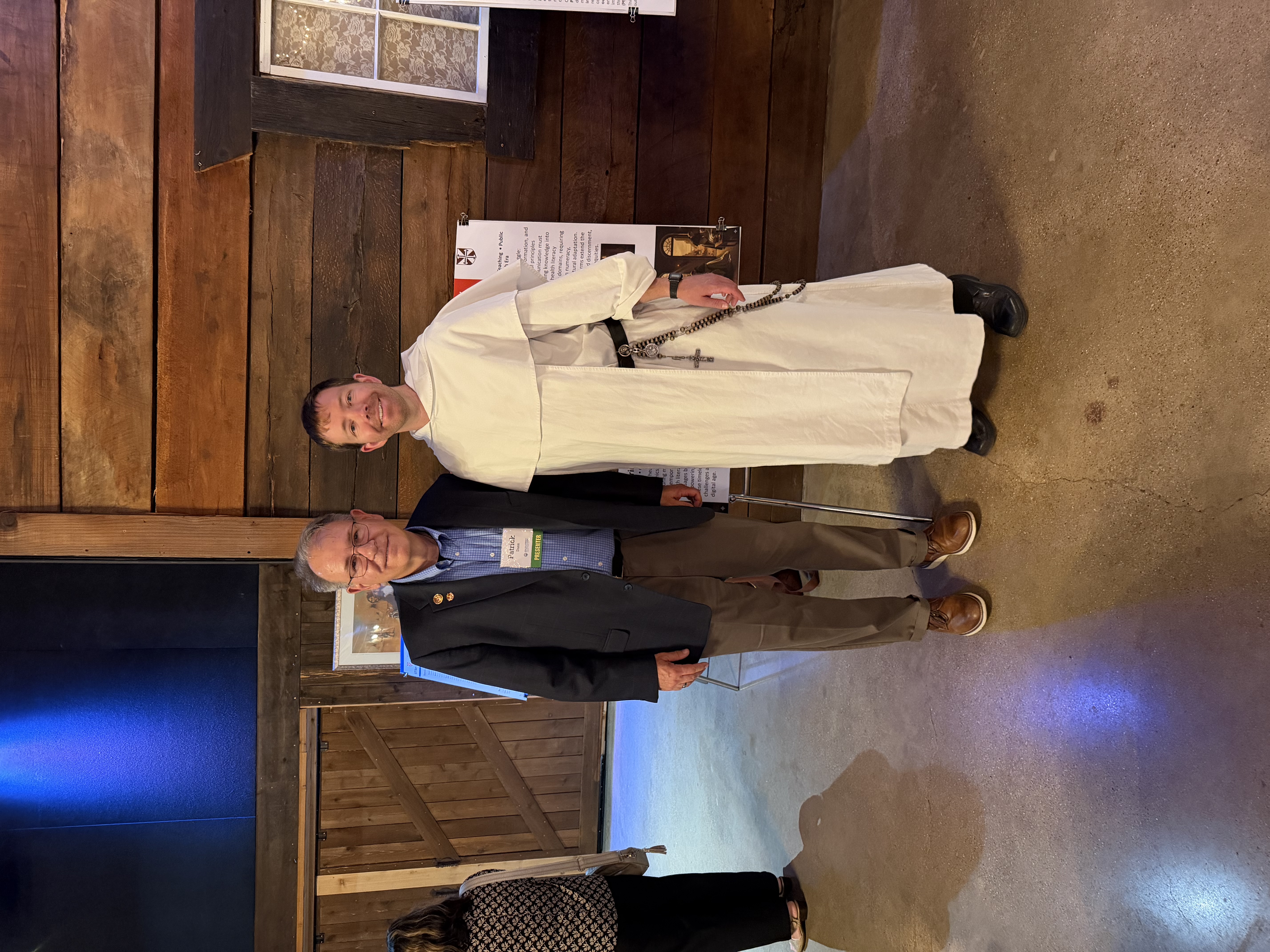
The Collaboration
Our work began in different settings: one in healthcare and health education, the other in preaching and religious formation. Yet both disciplines confront a common question: how can complex and meaningful ideas be communicated in ways people can understand and apply?
Teaching That Heals brings these perspectives together, connecting ancient insights about teaching and persuasion with contemporary approaches to health literacy and education.
The manuscript is under coauthor review. We look forward to sharing publication updates and information about requesting a copy.
Request functionality will be added before public launch.